Herbs and folk medicine
In the 16th century the belief that nature had healing powers characterised medicine.
The physician was a mediator of nature’s forces. In the 17th century some physicians started utilising chemical substances in their treatment, such as iron, mercury, lead and china bark (quinine).
When looking into which plants that have been used on which diseases in earlier times, it often can appear unsystematic and random. Many attempts have been made at creating a system in the relationship between illness and plants. One of the most well-known systems is the doctrine of signatures. The idea is that the shape of the plants should indicate which illnesses they could be applied against. For example, spotted leaves were supposed to help against spotted fever, and yellow flowers against hepatitis.
In older medicine there was a distinction between medical books and herbal books.
The medical books addressed a scientific audience, whereas the herbal books addressed the public. The herbal books were meant to function as a help to self-help, by teaching people how different plants could cure a disease.
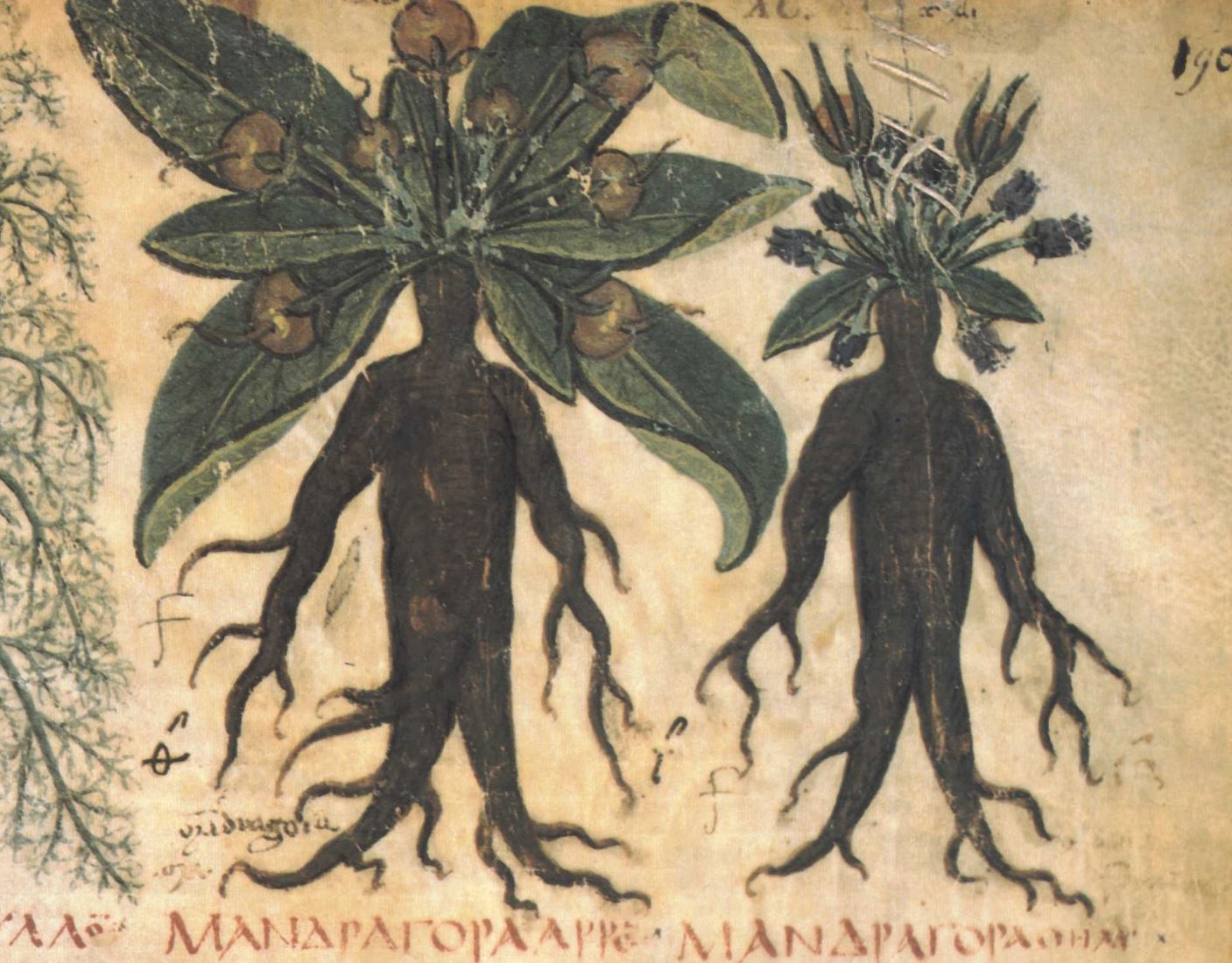
Biblioteca Nazionale, Naples.