Aconitum napellus
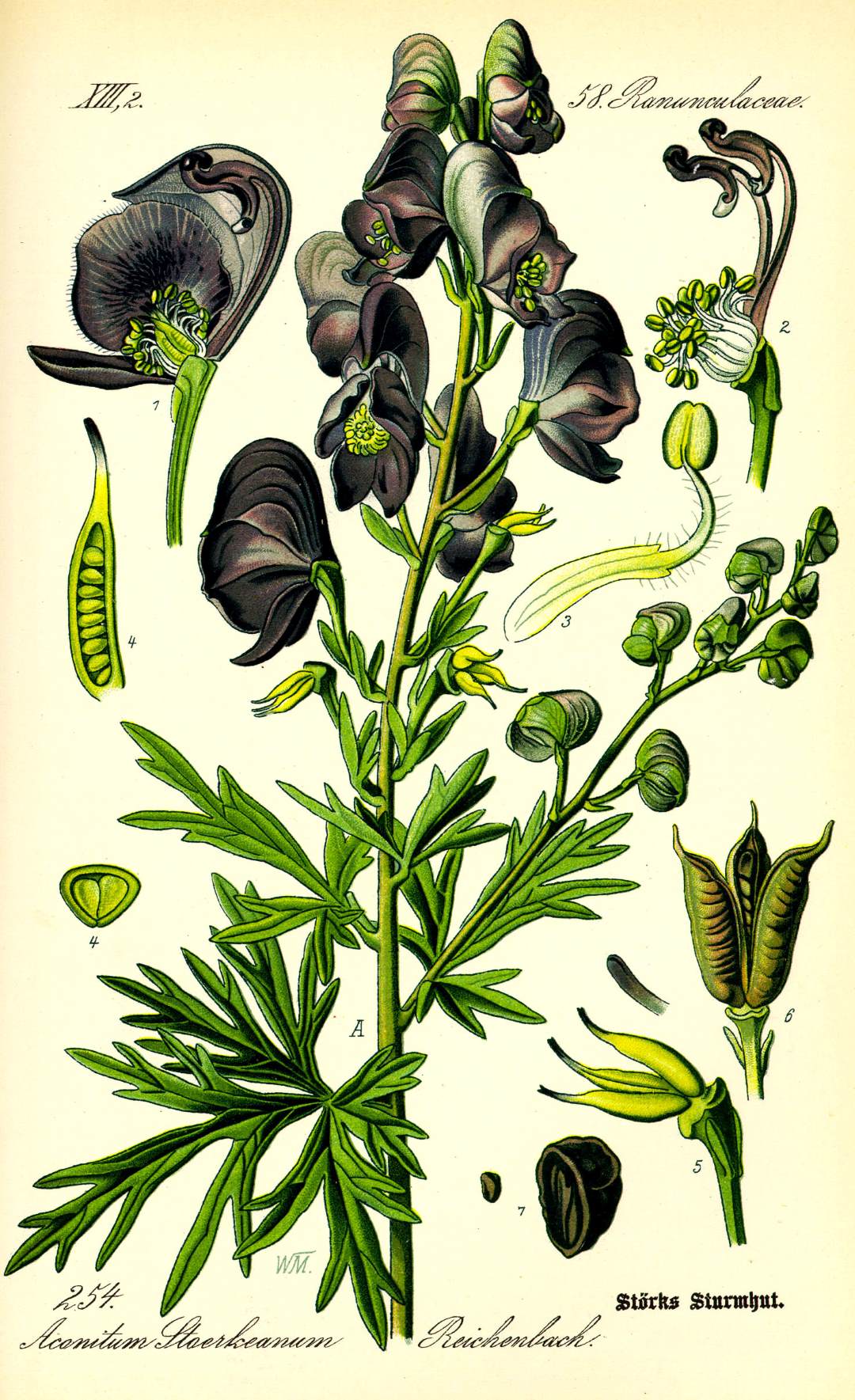
English: aconite, monk´s hood, monk´s blood, wolf´s bane
German: Eisenhut, Sturmhut, Venuswagen, Wolfskraut, Giftkraut, Fuchswurz, Tübeli
French: aconit napel, casque de Jupiter, sabot de Vénus
Norwegian: hjelm, storhjelm, venusvogn, stormhatt, munkehette, heksekyse, geitedaude
Ranuculaceae, perennial.
Old monastery plant.
Used parts: tubers, whole herb.
NB! This is regarded as Europe´s most poisonous plant, dangerous even to the touch.
Qualities and use according to tradition
Painkilling, anaesthetic and calming, fever and pulse lowering, paralyzing.
On unhurt skin used against pain after strokes or against neuralgia and other pains caused by the nerves.
Through the ages it was much used as a poison for spears and arrows, in poisoned baits against pests like wolf and fox – and for poisoning in general. The old Swedish name ört-arsenik, herb-arsenic, reveals something. Even the pollen is poisonous and there are stories about how bees, by chance, have made deadly honey.
This plant also has long traditions as an ingredient in the old mysterious witch ointments.