Alchemilla vulgaris
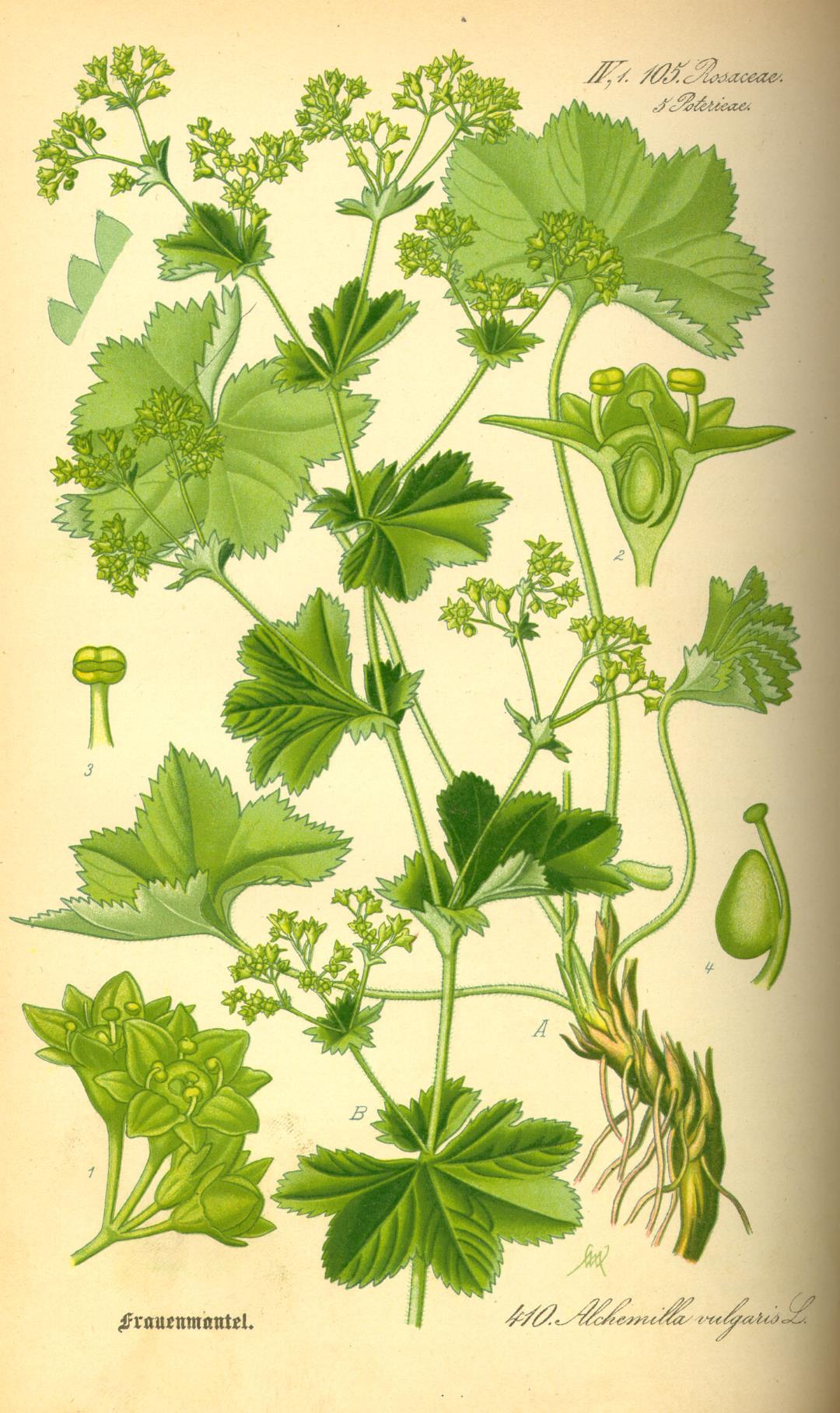
English: lady´s mantle, dew cup, our lady´s mantle, lion´s foot
German: Frauenmantel, Gemeiner-Frauenmantel, Taumantel
French: alchémille commune, pieds de lion
Norwegian: marikåpe, marikjortel, Jomfru Maria kåpe, marimynte, løvefot, vasstakk
Rosaceae, perennial.
Used parts: leaves, whole flowering herb.
Qualities and use according to tradition
It regulates menstruation, strengthens the uterine and the appetite, is a mild astringent, anticonvulsant, puts an end to diarrhoea, lowers a fever, stimulates wound healing and excretion of urine.
One could put crushed leaves or squeeze some liquid from the leaves on difficult wounds and insect bites. Flattened leaves were used as wound dressings, since it was believed they had the ability to “draw inflammations”.
Extracts have been frequently used as a rinsing agent to avoid gynaecological ailments and as covers for wounds and hurt skin. The lady´s mantle was looked upon as one of the most important herbs for women. It could ease childbirth and the problems afterwards, and it could even heal a hurt hymen.
What seem to be drops of dew on the leaves of this plant is as a rule a secretion from the plant itself. These drops were supposed to have mysterious and magic powers, not only in the alchemic process of making gold out of lead but were also believed to be a source of eternal youth.
Used as a yarn dyer this plant gives various shades of yellow. If iron sulphate is added, it gives several shades of grey.