
Calendula officinalis
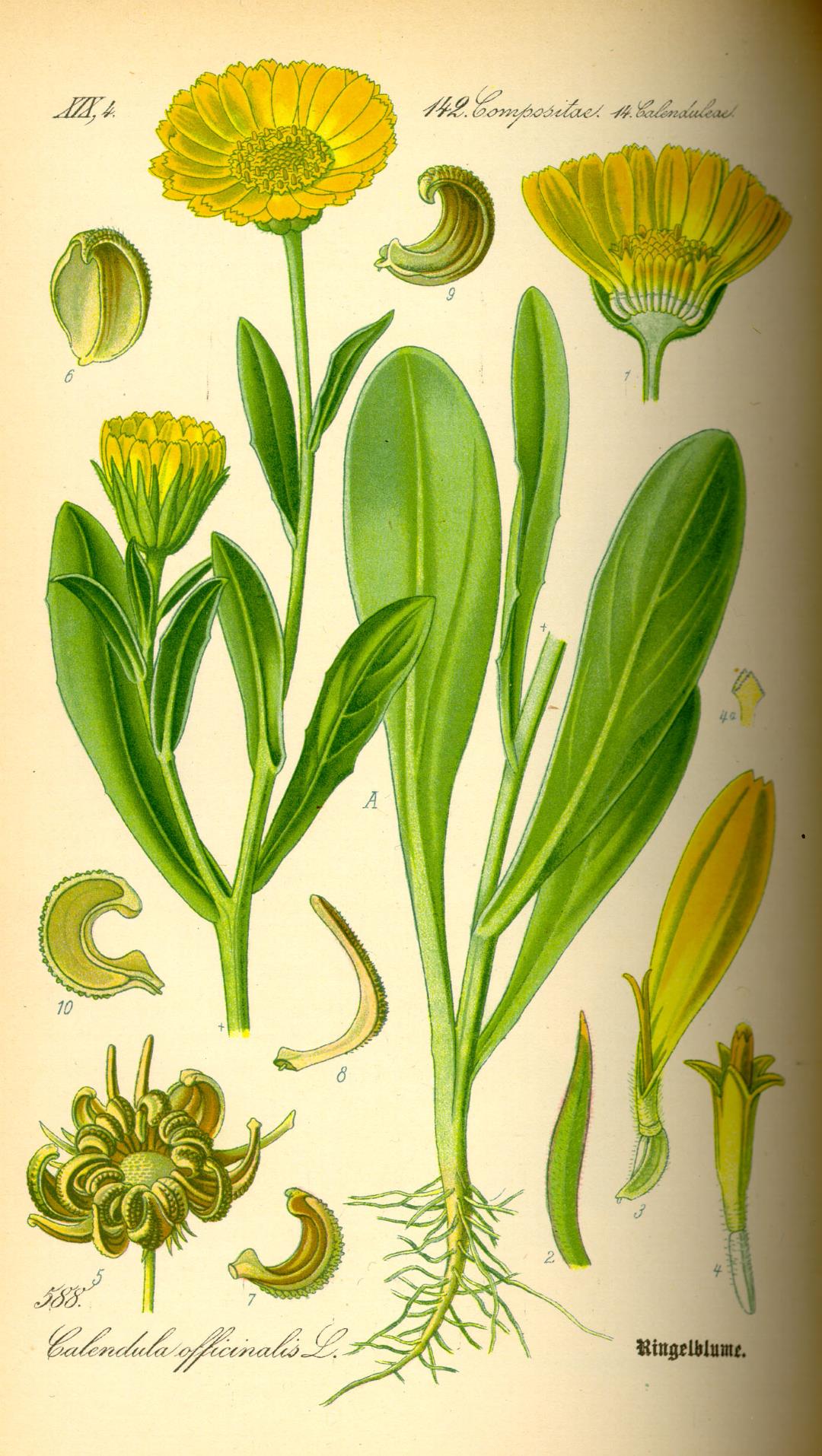
English: marigold, marybud, calendula, holigold, bull´s eyes
German: Ringelblume, Studentenblume, Warzenkraut, Goldblume
French: calendule, souci
Norwegian: ringblomst, ringblom, morgenfrue
Asteraceae, annual.
Old monastery plant.
Used parts: flower, leaves, plant juice.
Qualities and use according to tradition
In stimulates sweat, urine, bile and stool, regulates menstruation and promotes ovulation. It is antiseptic and disinfectant, bacteria, fungus and virus inhibitory, astringent, softening and wound healing, styptic, calming and antihypertensive, detoxifying and a mild anticonvulsant.
In the Swedish Herb Book of 1628 we can read: The one that urinates with Blood must boil Marigold and drink of it, then it will end.
Marigold is first and foremost a herb for the skin with a favourable effect upon most skin disorders, but it is also looked upon as a herb for the women. Externally, oil and ointment of marigold has been used against bruises, irritated skin, eczema, skin cracks and sores, considered as particularly favourable on bedsores, also preventive, and on painful varicose veins. Fresh juice of the whole plant, fresh, crushed flowers and leaves, or herb tea made of flower petals may be used for the same indications. A cold extraction of flower petals is reckoned particularly suitable to treat fresh burns. It is claimed that ingredients in the marigold have the ability to increase the bloodstream through the skin and to stimulate the regeneration of skin.
Fresh or dried petals of marigold can raise both taste and visual impression of rather ordinary food. Dried marigold petals have been a much cheaper substitute for and a widely used adulteration of saffron through the ages. Petals of marigold could also be used to give colour to butter and other food products.