Lavandula officinalis (angustifolia)
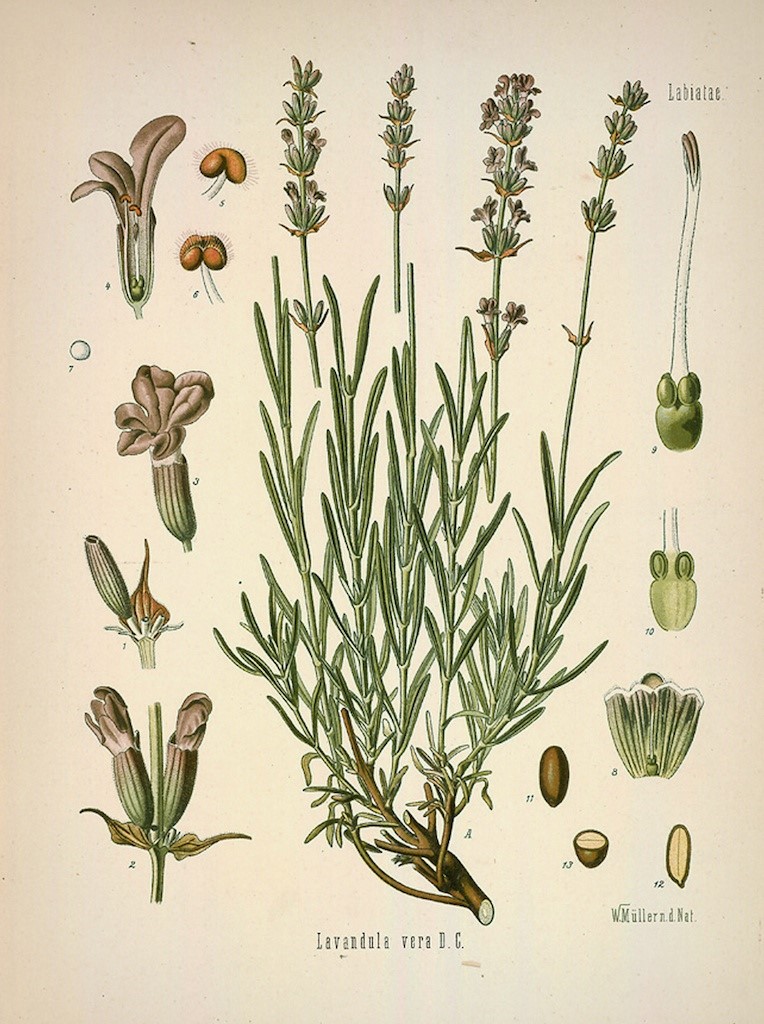
English: lavender, true lavender, English lavender
German: Lavendel, Echter Lavendel
French: lavande, lavande officinale, lavande vraie
Norwegian: lavendel
Lamiaceae, perennial.
Old monastery plant.
Used parts: leaves, flowers, blooming tops or whole plant.
Qualities and use according to tradition
It works soothing and soporific, anti depressive, antispasmodic and analgesic, it is a tonic for the stomach and for the nerves. It stimulates excretion of bile, urine and phlegm, lowers the blood pressure, regulates menstruation, works mildly astringent and antiseptic, inhibits bacteria and fungi, repels and kills insects and may cause irritation when used directly on the skin.
Hildegard von Bingen (1098-1179) tells us about lavender: It helps against liver- and lung ailments and the insect pest. Bouquets to breathe through were extensively used at the risk of air borne infection, especially when the plague was closing in. Lavender was strewn on the floor in churches and private homes for the same reason, and because the insects shun lavender scent. Women made lavender into hats and other garments to prevent nausea and discomfort. Even today we love to smell the lavender pillows.
Fresh herb was rubbed on gout, swollen areas and aching sores. Lavender extracts were highly relevant as mouthwash by sores in the mouth and bad breath.
Chief physician Danielssen mentions in his book of 1847 in connection with treatment of leprosy: …smoke treatment with astringent herbs like Flores Lavandulae. The frequent use of such remedies makes the outer surface of the skin little by little regain its lustre and strength.