
Myrrhis odorata
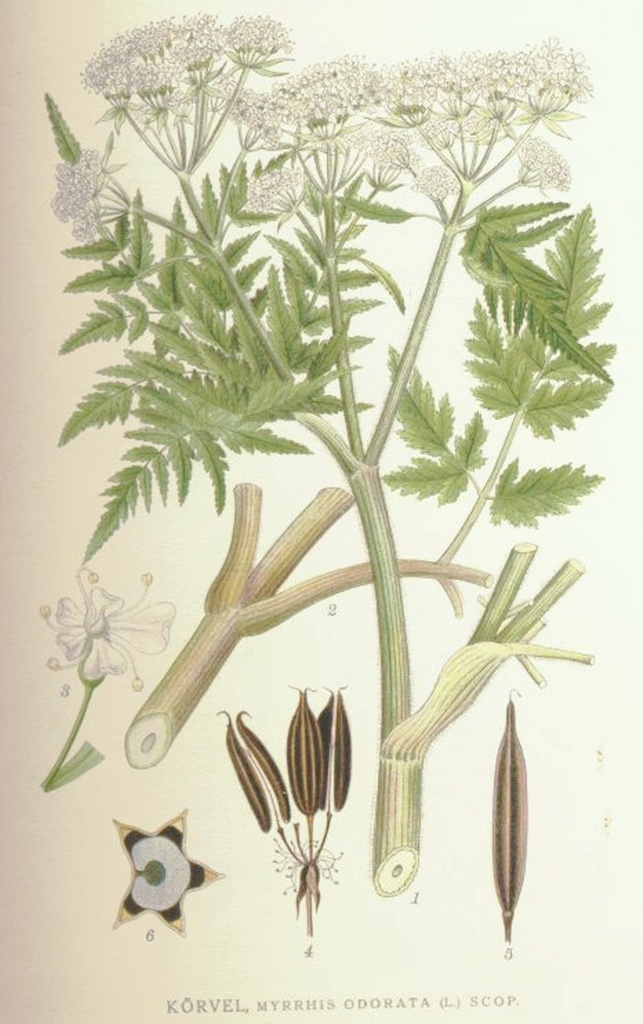
English: sweet chervil, sweet cicely, British myrrh, sweet-fern, shepard´s needle
German: Süssdolde, Myrrhenkerbel, Englischer Kerbel, Spanischer Kerbel
French: cerfeuil d´Espagne, cerfeuil musqué, cerfeuil vivace, myrrhis odorant
Norwegian: spansk kjørvel, aniskjørvel
Apiaceae, perennial.
Old monastery plant.
Used parts: seeds, leaves, root.
Qualities and use according to tradition
Sweet chervil is an aromatic plant with a stimulating effect on appetite and digestion, a weakly promoting effect on breast milk, mucus, urine and faeces. It is slightly antiseptic, blood purifying and anti hypertensive.
Quite similar to angelica root, one could breathe through the root of sweet chervil held between the teeth, at risk of dangerous infections, particularly by plague. Ointment made from the root was used on all kinds of wounds. Crushed, fresh leaves were used on gout and rheumatism nodules. Sweet chervil was used as a general tonic.
Fresh leaves are used in salads, cooked as a vegetable or served in soups. In earlier times it was common to boil the sweet chervil along with rhubarb to soften the acid taste. Green, immature seeds have a penetrating sweet anise flavour. They taste very nice, chopped in desserts and salads. If you chew the seeds, they not only taste like candy, they also have the ability to reduce intestinal gases. If the seeds are consumed in greater amounts, they have a laxative effect. The root as well can be used fresh in salads or cooked as a vegetable.
Finely cut leaves and fresh seeds may be used as a sweetener by diabetics, since it will not have an effect on blood sugar.
Not too many years ago it was common to polish precious wooden furniture, especially oak, with sweet chervil, using the whole, fresh plant. The woodwork became beautiful and fragrant, it is said.