
Origanum vulgare
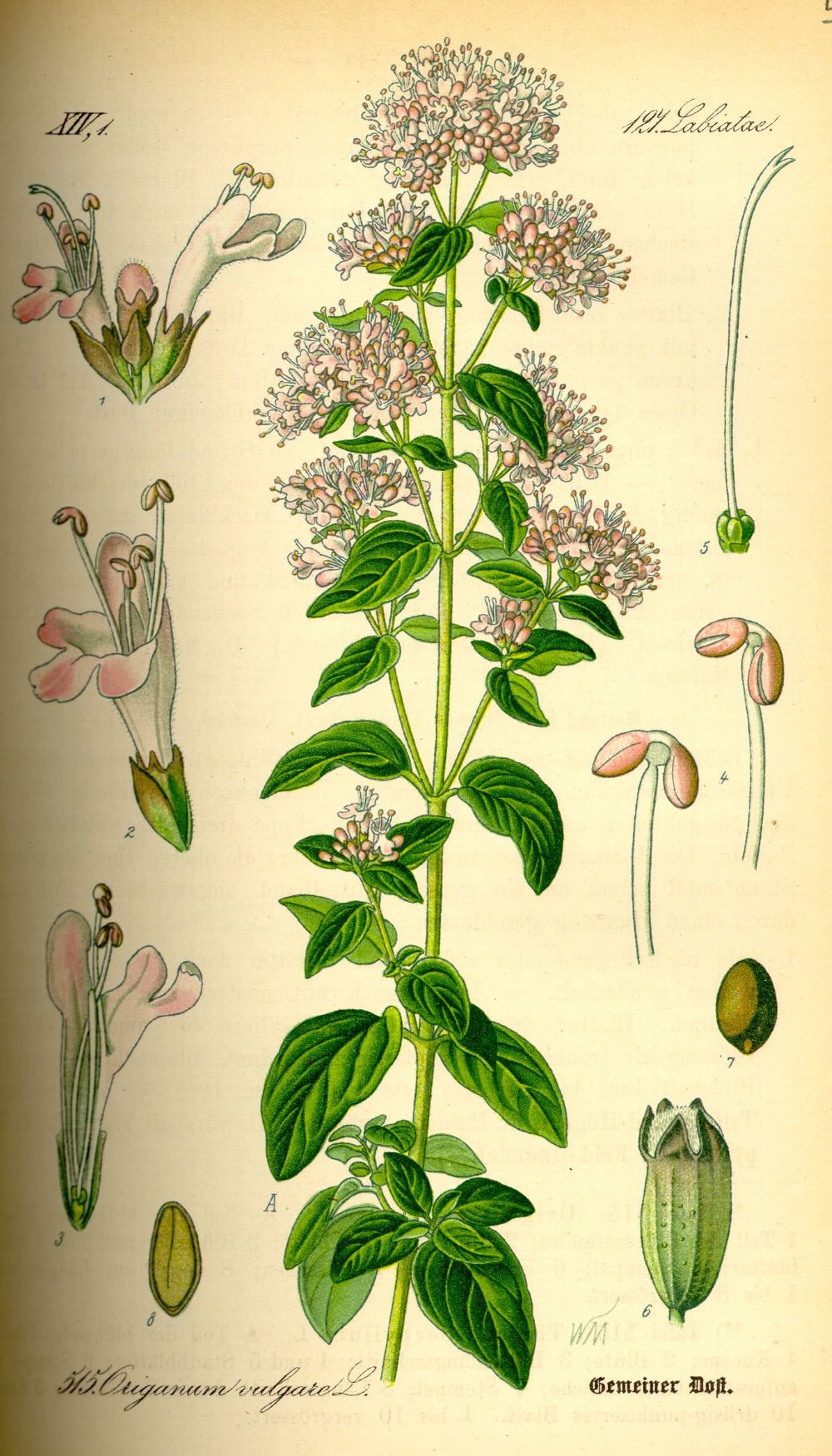
English: wild marjoram, marjoram, oregano, wild oregano, joy of the mountain, wintersweet
German: Dost, Dorant, Wilder Majoram, Staudenmajoram, Mutterkraut, Schusterkraut, Badkraut
French: origan, origan vulgaire, marjolaine sauvage
Norwegian: bergmynte, kung, kungsmynte, kong, kongsgras, vill oregano, ølkom
Lamiaceae, perennial.
Used parts: leaves, flowers, young shoots, whole herb without root.
Qualities and use according to tradition
Sharp aromatic, promotes appetite and digestion, stimulates slightly the production of sweat, bile and urine, expectorant, astringent and antiseptic, antiemetic, stimulates the uterus and promotes menstrual period, warming and slightly calming.
By chewing fresh leaves, toothache could be relieved. This could also be used against seasickness and against snake venom. In the Swedish Herb Book of 1628 we can read: If someone is bitten by a snake, one must boil this herb and give them to drink. It helps.
Wild marjoram could drive away the devil and protect women against witchcraft in connection with bridal marriage and childbirth.
It has a long tradition as seasoning in meats, dishes made of blood and in soups, and it was considered as one of the “sausage herbs” together with savory, thyme and marjoram. Also used in the same manner as hops by brewing beer.
Wild marjoram is not an uncommon additive in soaps and perfumes, especially for men.