Peucedanum ostruthium
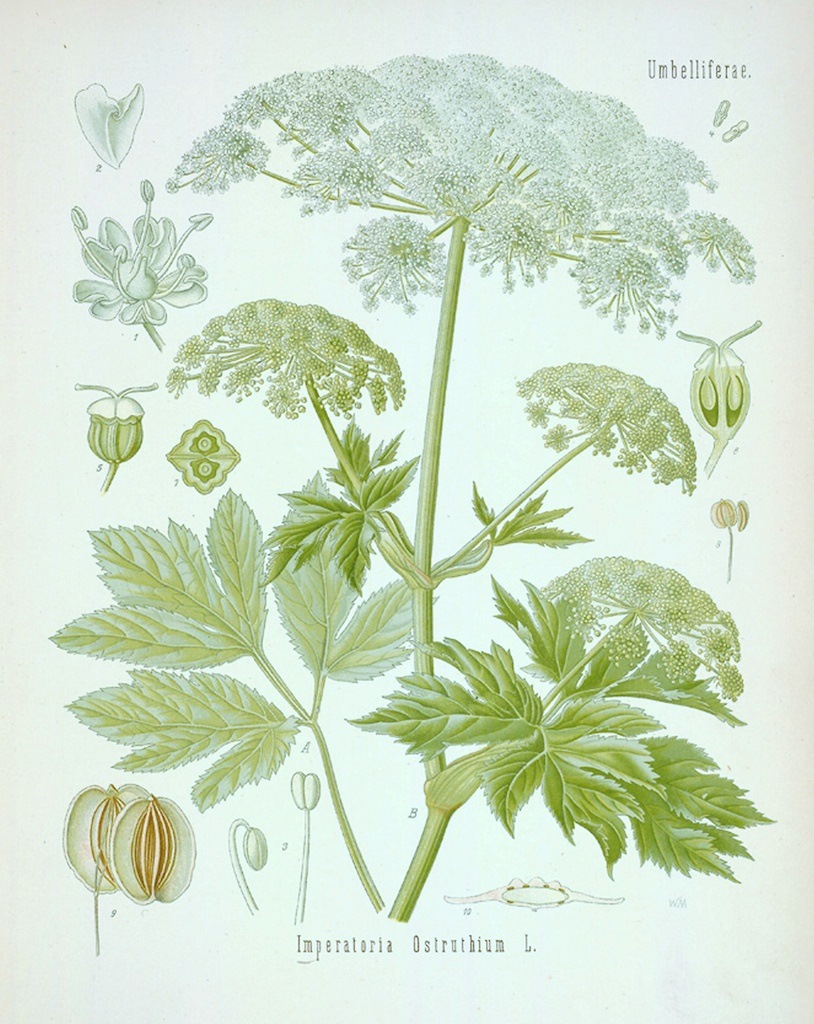
English: masterwort
German: Meisterwurz, Kaiserwurz, Gebbräuchlicher Haarstrang
French: benzoin francais, impératoire peucédan ostruthium, peucédan ostruthium
Norwegian: meisterrot, mesterrot
Apiaceae, perennial.
Old monastery plant.
Used parts: rhizome and root, also leaves, flowers and seeds.
Qualities and use according to tradition
It is aromatic and bitter, stimulates appetite and gastrointestinal function and promotes digestion, it is antispasmodic, drives sweat, urine and menstruation, resolves phlegm and reduces fever and inflammation.
Fresh leaves were traditionally used on sores with something evil in that would make them heal slowly. The juice of fresh root was used on boils and swellings, to get out the evil. Nicholas Culpeper (1616-1654) writes: If you drip the juice of this plant in green or unclean wounds, or sores with poison in them, they will quickly clean and heal.
Masterwort is an old witchcraft herb that could expel the devil, trolls and witches like no other plant because of the strong ties it was perceived to have to the trinity and all the symbolism put into that. The ancient Romans regarded the plant as a universal antidote: it heals all wounds, gives the blind the ability to see and makes the old ones young again.
An old quotation from Henrik Harpestreng (died 1244): It heals leprosy when mixed with vinegar.