Pulmonaria officinalis
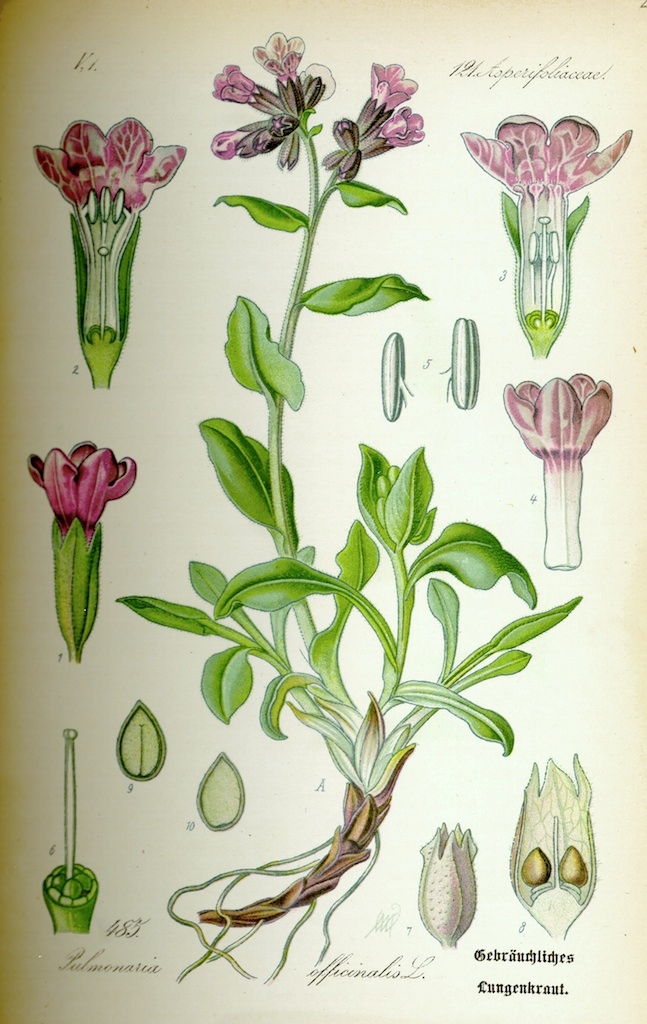
English: lungwort, lung moss, spotted comfrey, Jerusalem sage
German: Lungenkraut, Lungenwurz, Fleckenkraut
French: pulmonaire officinale
Norwegian: lungeurt
Boraginaceae, perennial.e
Old monastery plant.
Used parts: leaves or whole herb.
Qualities and use according to tradition
Expectorant and cough suppressant, sweat driving and diuretic, emollient and astringent, styptic and wound healing, anti bacterial, inflammatory and calming irritation.
Applied directly on wounds and injuries as a styptic and healing agent.
Lungwort is an example of the widely prevalent signature doctrine, that from the appearance of a plant you are able to see what ailments it may help against. With a little good will, a speckled leaf of the lungwort may resemble a diseased lung. That the colour of the flower may change from red to violet to dark blue, could be interpreted as colour changes in the blood, whether it is on its way from or to the lungs.
A legend tied Virgin Mary to the spotted lungwort. It was said that once she nursed the baby Jesus, breast milk was dripping on the plant. Therefore lungwort was considered to be one of St. Mary´s herbs.
In recent times, it has been assumed that lungwort could contain substances harmful to the liver since that is the fact with its close relative Comfrey (Symphytum officinale). Research has shown that this is not the case.