Allium cepa var. viviparum
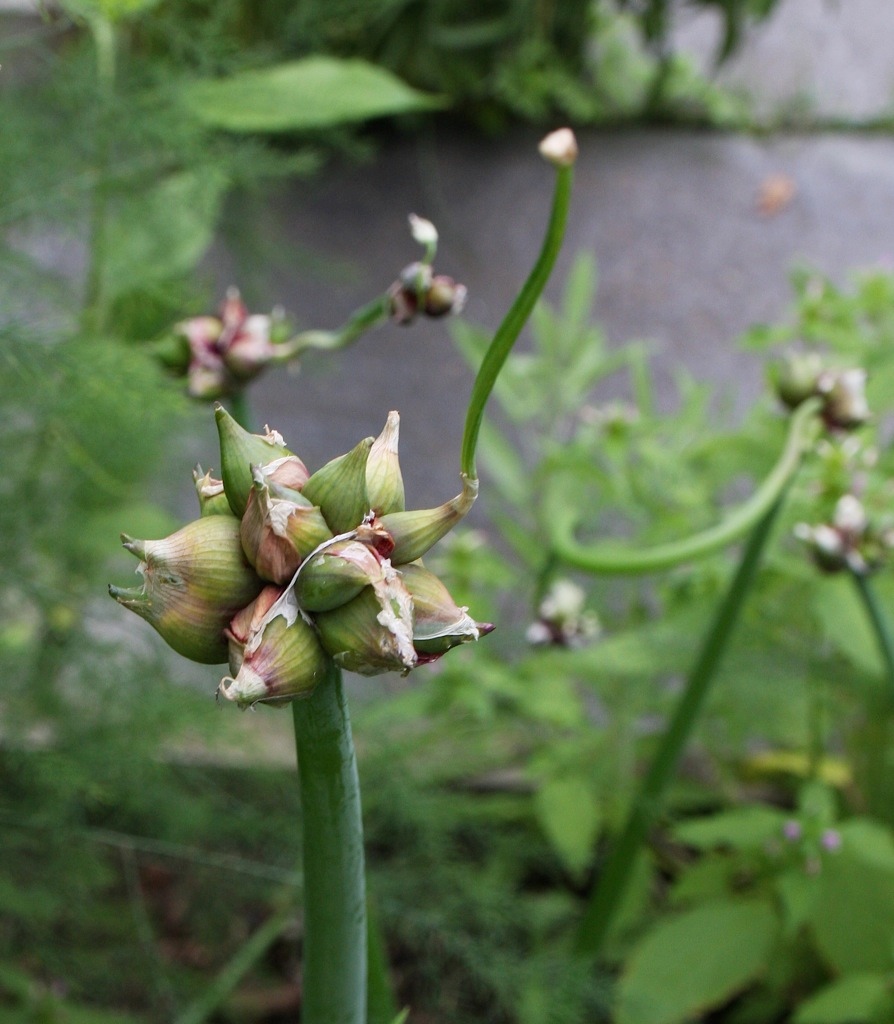
English: Egyptian onion, walkabout onion, top set onion
German: Luftzwiebel, Etagenzwiebel
French: oignon d´Egypte
Norwegian: toppløk, luftløk, etasjeløk, egyptisk løk, treløk
Alliaceae, perennial.
Used parts: onion, onion juice, leaves and flowers.
Qualities and use according to tradition
Promotes appetite and digestion, stimulates bile and urine and drives out intestinal worms when eaten raw.
It lowers fever, blood pressure, blood sugar and cholesterol, relieves asthma, works expectorant and antispasmodic, soothing, mildly soporific and analgesic, is anti-inflammatory, antiseptic, inhibits bacteria and fungi, cleans the blood and prevents blood clots. In other words: abilities that are quite common within the onion family.
Externally used as a poultice, boiled as a soothing remedy on sore skin, or raw, as an irritant or used against fungus, athlete´s foot or ringworm, also used on insect bites and against gout ailments.
In the Swedish Herb Book of 1628, it is mentioned that the onion has 18 virtues, among those we find: Onion crushed with figs is able open boils, crushed with salt it makes warts disappear. If the onion is soaked in cold water for one night and then the water is drunk, it expels intestinal worms from a child.