
Allium porrum
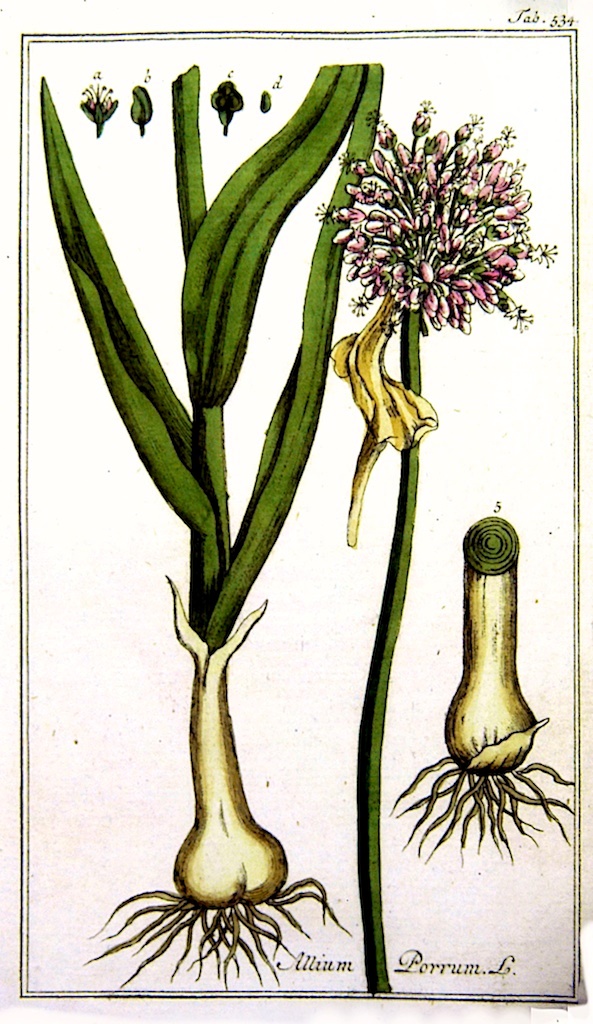
English: leek
German: Lauch, Porree, Breitlauch, Winterlauch, Fleischlauch
French: poireau, porreau, poirée, poirette
Norwegian: purre, purreløk, langløk (Bergen)
Alliaceae, biennial.
Used parts: leaves and leave sheaths.
Qualities and use according to tradition
Resolves phlegm and opens respiratory ways, stimulates urine, sweat and bile, is antiseptic, inhibits bacteria and fungi, lowers cholesterol, dilates the blood vessels, and works antispasmodic. Consumed raw it is poisonous to intestinal parasites.
A poultice of boiled leek on boils and inflamed wounds was believed to “draw out the evil”. A poultice of fresh, mashed leek made boils ripen so they could be cut open.
Mashed or chewed leek was a common remedy against fungal diseases like athlete´s foot and ringworm and on insect bites.
Leek has abilities that are more or less common to all members of the onion family, where allium sativum, garlic, is the foremost representative concerning valuable and potent medical effect.
In ancient Egypt, leek was a holy plant. To swear by the leek was as important as to swear by one of the deities.