Allium schoenoprasum
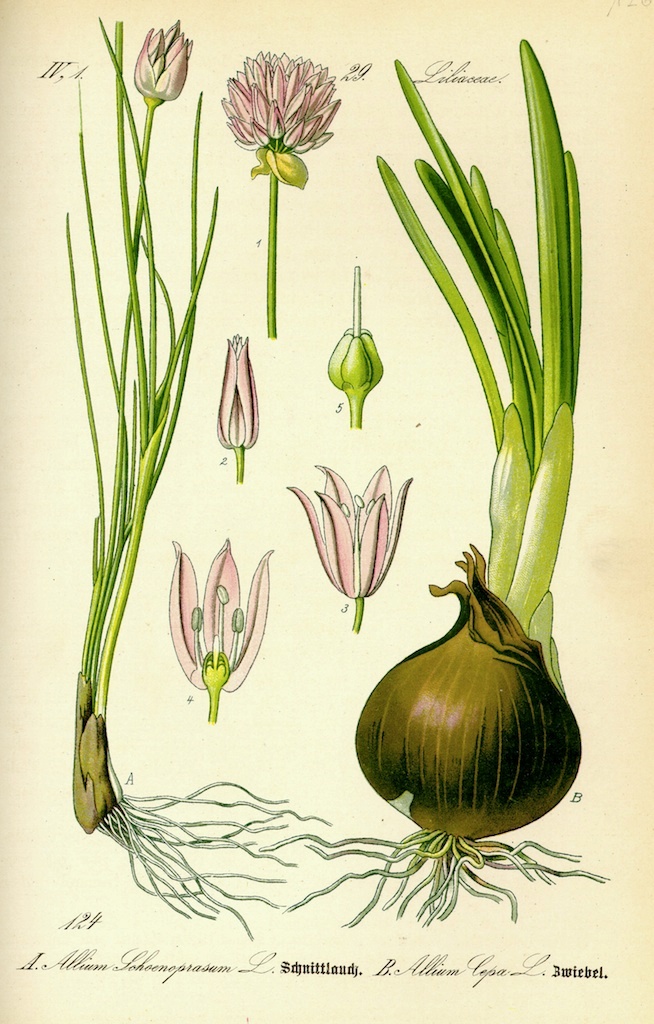
English: chives
German: Schnittlauch, Graslauch, Binsenlauch, Schnittling, Brislauch
French: ciboulette, civette, chiboulette, brelette
Norwegian: grasløk
Alliaceae, perennial
Old monastery plant
Used parts: leaves, juice and flower
Qualities and use according to tradition
It inhibits inflammations and heals wounds, is analgesic, cooling, softening and it cures ailments caused by fungi like athlete’s foot. It cures ulcers of the mouth, and pain in mouth and throat.
Placed directly inn a tooth hole it may reduce toothache. Fresh leaves rubbed on the skin may ease rheumatic pain. On boils and inflamed wounds fresh chives, crushed or chewed, will draw out “the evil”.
Fresh chives could be useful against drunkenness, it made men attracted to women, and it eased constipation. Taken with wine the chives could be efficient against adder´s bite and could help against all kinds of poison. Chives also had the ability to keep evil spirits and ghosts away. Chives growing in a container inside the house could be sufficient.