
Allium ursinum
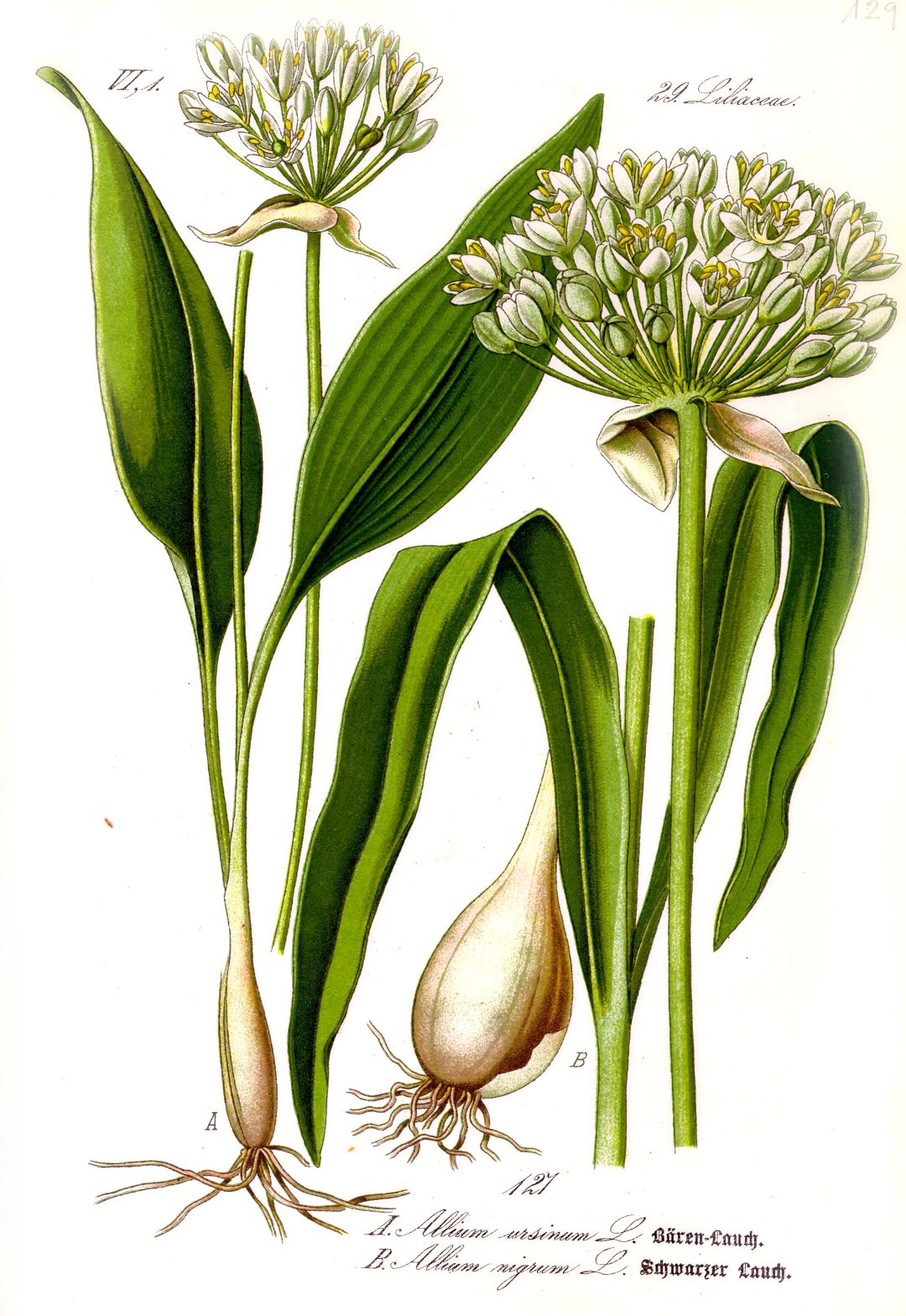
English: ramsons, buckrams, wild garlic, bear’s garlic, broadleaved garlic
German: Bärlauch, Ramser, Ramsel, Hexenzwiebel, Wurmlauch, Zigeunerlauch
French: ail des ours, ail des bois
Norwegian: ramsløk
Alliaceae, perennial.
Used parts: whole herb, seeds, plant juice.
Qualities and use according to tradition
It has much in common with garlic and the other relatives of the onion family:
Stimulates appetite and digestion, promotes excretion of phlegm, bile and urine and when eaten raw it expels intestinal parasites. It lowers fever, blood pressure, blood sugar and cholesterol, relieves asthma and works as an antispasmodic, calming, mildly soporific and analgesic agent. It is antiseptic, bacteria and fungus inhibiting, prevents inflammations, blood clots and varicosity, and it cleans the blood.
Externally the ramsons were used as a poultice upon gouty joints, on infected wounds and other skin disorders caused by fungus or bacteria. Commonly used on athlete´s foot, ulcers of the lips and mouth, or pain in mouth and throat.