Angelica archangelica
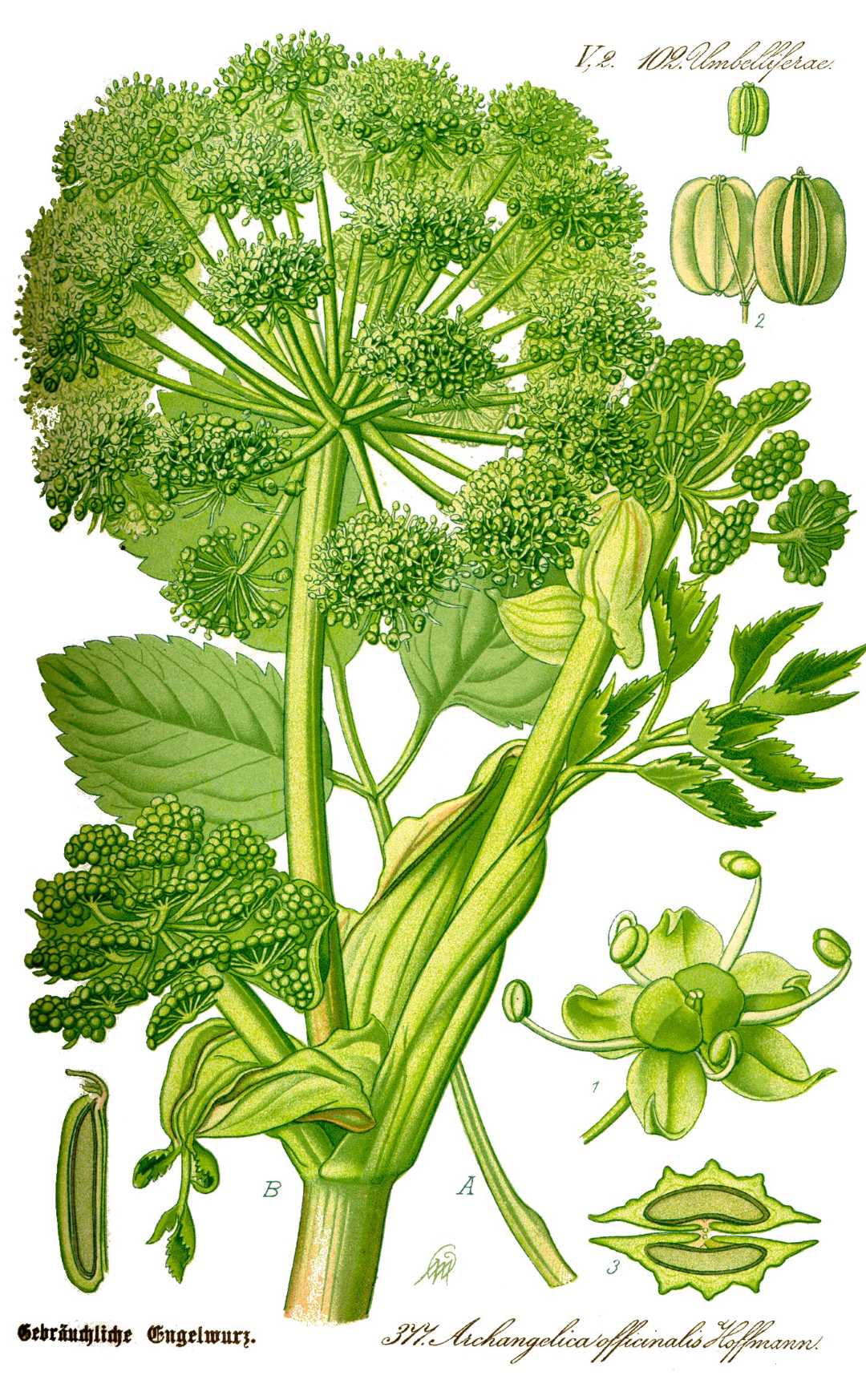
English: angelica, archangel, holy ghost
German: Engelwurz, Erz-Engelwurz, Garten-Angelica
French: angélique, archangélique, angélique vraie
Norwegian: kvann, kvannjol, jol
Apiaceae, biennial or perennial.
Old monastery plant.
Used parts: Root, flower, seeds, whole plant.
Qualities and use according to tradition
Angelica contains, among many others, flavouring and bitter agents and stimulates appetite, enteric secretion and menstruation, relieves cough, drives phlegm, urine, and sweat.
It lowers fever, inhibits bacteria and fungi, cleans the blood and is a general disinfecting agent. Primarily angelica relieves ailments linked to the digestive system, it works as a bactericidal agent in the gastrointestinal tract and increases the production of gastric acid.
Angelica smoked in a pipe gave disinfectant smoke. Angelica root between the teeth could protect against the pest if breathing with the mouth. Angelica was one of the very few medicine plants exported from the Nordic countries to the rest of Europe.
Angelica was in common use as food, used much in the same way as rhubarb and as a spice. Our ancestors considered angelica, both fresh and pickled, to be a delicacy. Maybe this has changed a bit over the years.
Angelica still is the most important aromatic in the French liquors Benedictine and Chartreuse and in the Norwegian St. Hallvard.