Artemisia absinthium
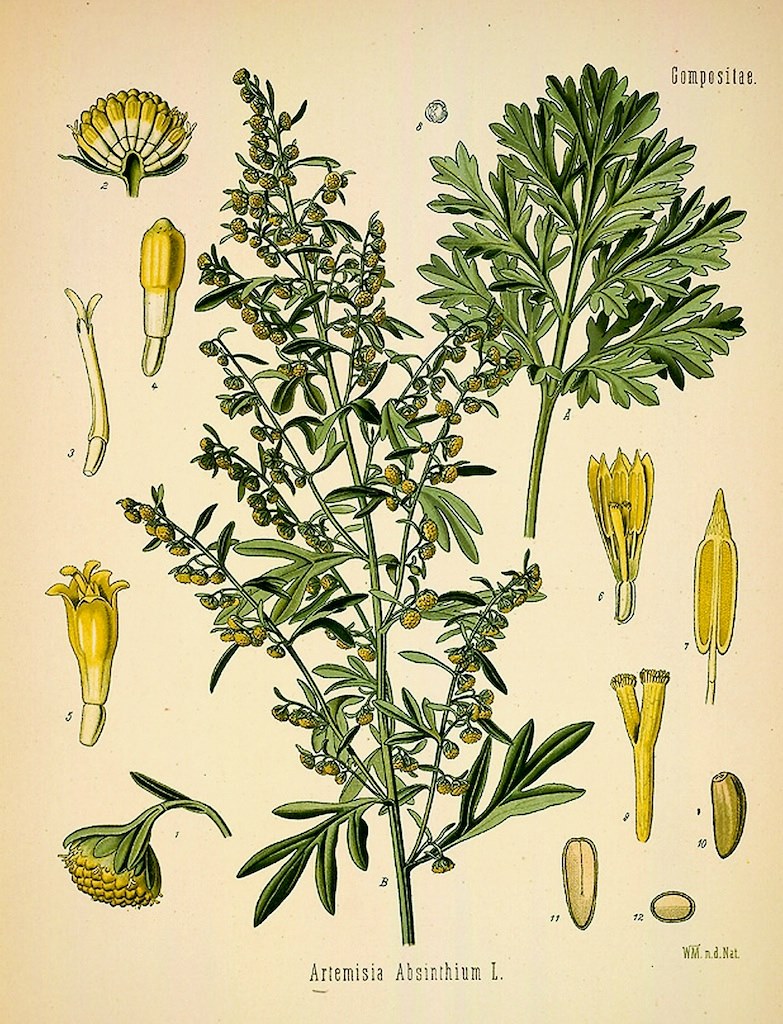
English: wormwood, absinthe, Warmot, vermouth
German: Wermutkraut, Absinth, Magenkraut
French: grande absinthe, absinthe, herbe d´absinthe
Norwegian: malurt
Asteraseae, perennial.
Old monastery plant.
Used parts: leaves, top with flowers.
Qualities and use according to tradition
It is aromatically bitter, stimulates appetite, bile and menstruation, it is disinfectant, anti inflammatory, antispasmodic and mildly antidepressant and most probably an efficient abortive.
Hildegard von Bingen (1098-1179) gave her advice about extract of wormwood, translated from German:
Drink this on empty stomach from May until October every third day, and it will suppress your inner melancholy, make your eyes clear, strengthen the heart and protect the lungs against disease. It warms the stomach, cleans the inner parts and facilitates good digestion.
In earlier times it was also commonly used for expelling intestinal parasites. Externally wormwood has been used on scratches, insect bites, lice and scabies, pruritus and sore muscles. It works deterring on moths and other insects and it was very much used as dried bouquets in the old outside lavatories. In the Swedish Herb Book from 1628 we can read:
Water of Wormwood kills Lice in the Head and also other Places if you wash your Head with it or other Places where it is needed.
It was also supposed to work against the desire of lust.
Wormwood was used to prepare absinthe in combination with angelica, anise and marjoram. Still used in vermouth and martini.
Chief physician Danielssen mentions Extractum Absinthii in his book from 1847 in connection with the treatment of leprosy.