Hemerocallis lilioasphodelus
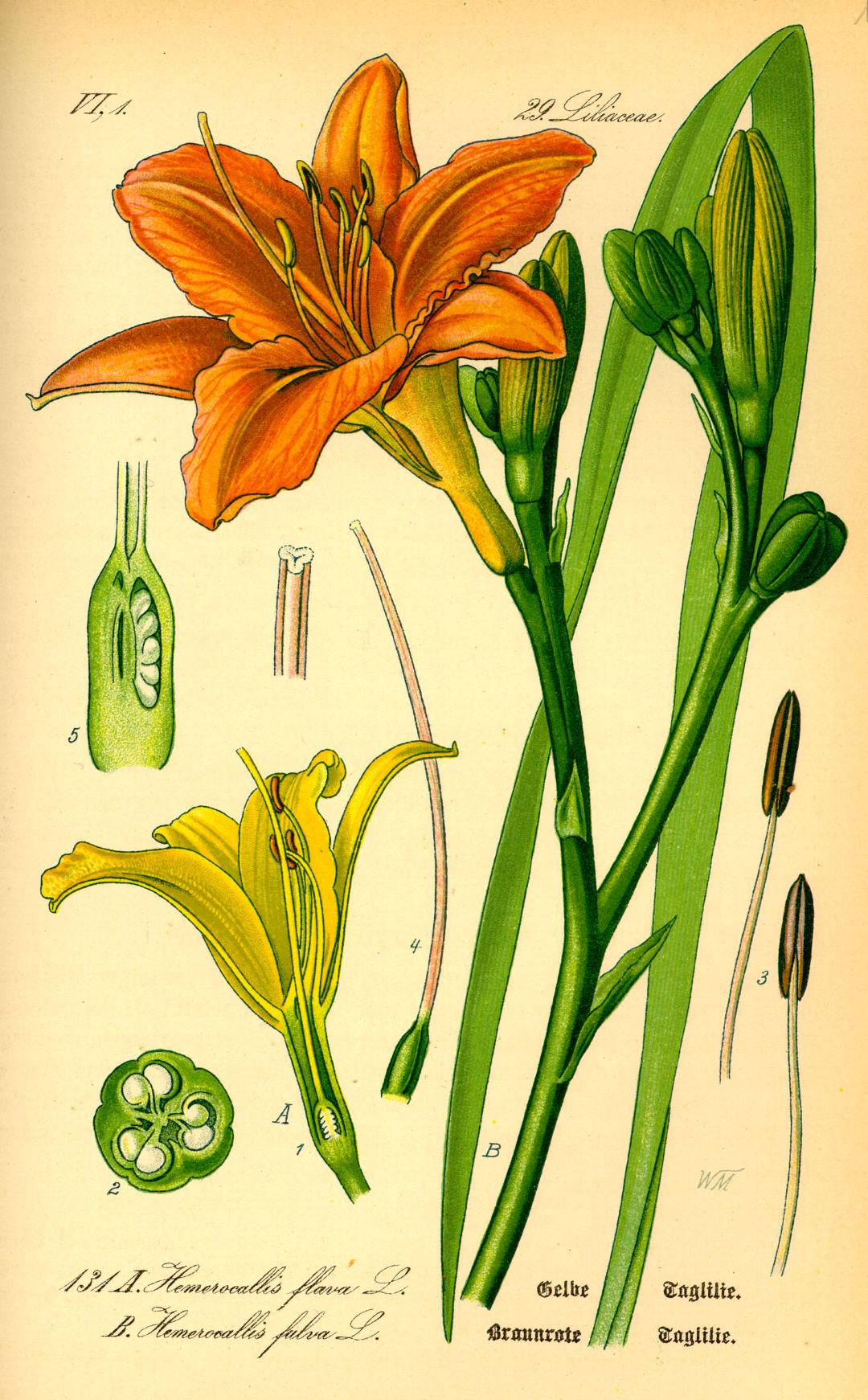
English: daylily
German: Taglilie
French: hémérocalle
Norwegian: daglilje
Hemerocallidaceae, perennial.
Used parts: flower, flower bud, leaves and tubers.
Qualities and use according to tradition
It is not easy to find literature on medical use of daylily although a number of sites mention this in passing, but most often without citing sources.
In some ancient European sources mentioned on the Internet, we are told that daylily works against sorrow, in what way is not said anything about.
Around 1050 daylily was used in China as a diuretic agent, to cure incontinence and painful urination. Juice of fresh crushed roots was given to patients suffering from liver cirrhosis and jaundice. In addition daylily was used for high temperature and bleeding.
The roots and flower crowns are told to have a traditional use as painkillers. Juice from the crushed root was used as an antidote against arsenic poisoning. Extract of the root is supposed to have an antitumor effect and is traditionally used to treat cancer and other kinds of tumour growth.