Iris pseudacorus
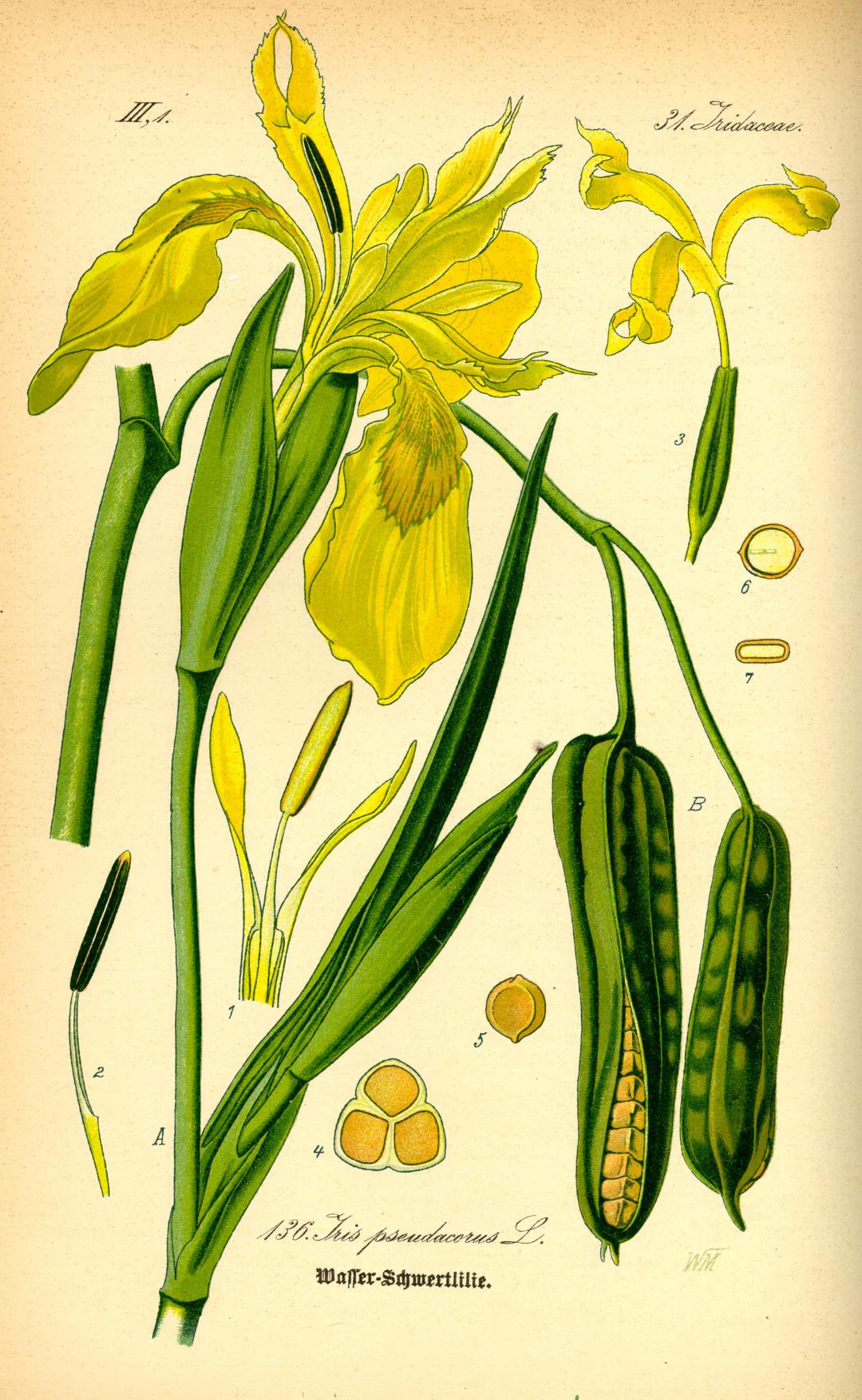
English: yellow iris, yellow flag
German: Sumpf-Schwertlilie, Gelbe Schwertlilie
French: iris des marais, iris faux acore, iris jaune
Norwegian: sverdlilje, jonsoklilje, mækje (mækir = sword in Old Norse), mææk
Iridaceae, perennial.
Used parts: rhizomes, seed, flower.
Qualities and use according to tradition
Fresh root/rhizome is astringent and cleansing, a vomiting agent and a laxative, it stimulates menstruation and it works painkilling.
A slice of fresh root/rhizome held against a painful tooth would quickly relieve toothache. The fresh root/rhizome is sharp and bitter. Dried root/rhizome is no longer bitter and works only astringent and soothing. Dried root/rhizome of iris has a pleasant smell. It has been used as a relief for toddlers having pains at dental breakthrough, almost like a modern teether.
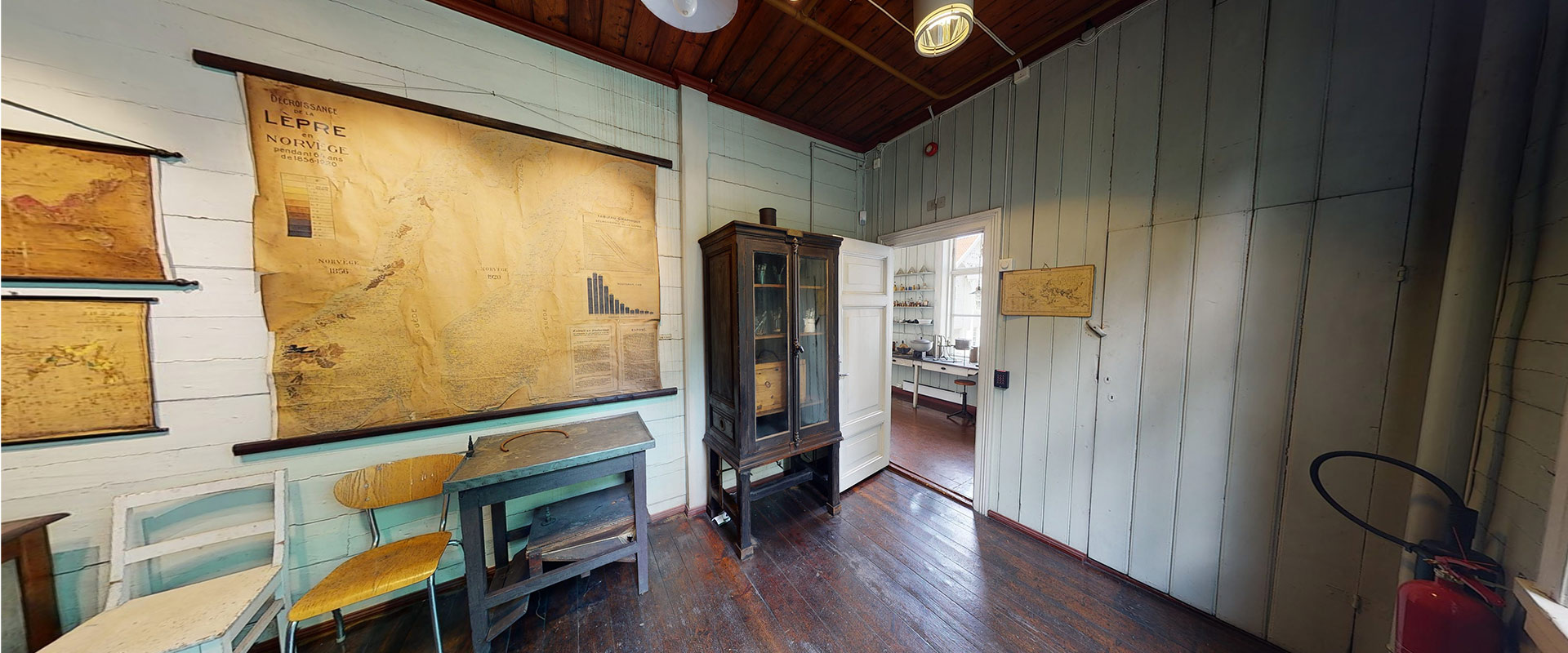
Fresh root/rhizome crushed in honey could heal hole ulcers, new flesh would fill the hole. Chief physician Danielssen mentions in his book from 1847 Iris as a remedy in the treatment of leprosy. Maybe he carried knowledge from at least 700 years back. Hildegard von Bingen (1098-1179) claims that: The Root of Iris grated well with old Fat helps against both Types of Leprosy, especially if lots of Goat Milk is consumed at the same Time.
Dried root/rhizome was also used as a stomach tonic remedy: …when the Stomach after one has gotten Food will not close and get Strength to perform its natural Wonders and Order.
Roasted seeds have been tried as a coffee substitute.
From the flower one can produce a beautiful yellow colour, from the root/rhizome a black colour.