
Hyssopus officinalis
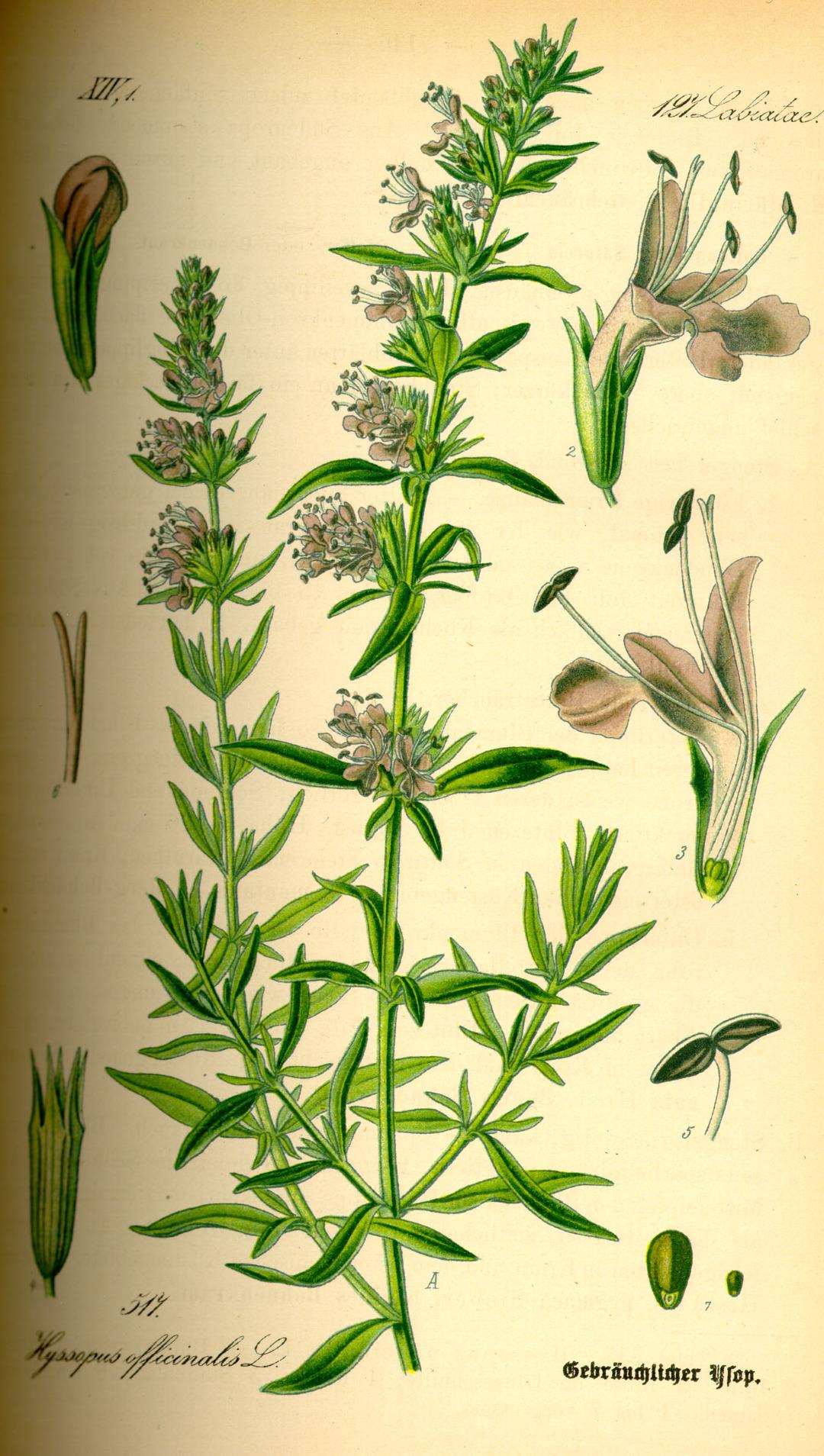
English: hyssop, azob
German: Ysop, Isop
French: hysope, hysope officinal, Ysope
Norwegian: isop
Lamiaceae, perennial.
Used parts: leaves, flowers, young shoots.
Qualities and use according to tradition
Universal medicine, aromatic, antiseptic, resolves mucus and cramps, stimulates appetite and digestion, menstruation, urine and bile, inhibits sweat and is a weak sedative, but it rises the blood pressure. It is astringent and anti inflammatory, used against scabies, itching, ringworm and other skin diseases.
Hildegard von Bingen (1098-1179) writes that hyssop helps against kidney- and gallstones, and she continues: Whoever coughs and has Liver Pain, and whoever is short of Breath and has Lung Ailments should eat Hyssop, either with Meat or Pork, and it will make him much better.
Hyssop is attributed a magical cleansing effect. At least around the Mediterranean, hyssop was used in a cleaning ceremony for the lepers who were declared healthy before they could return to society.