Salvia officinalis
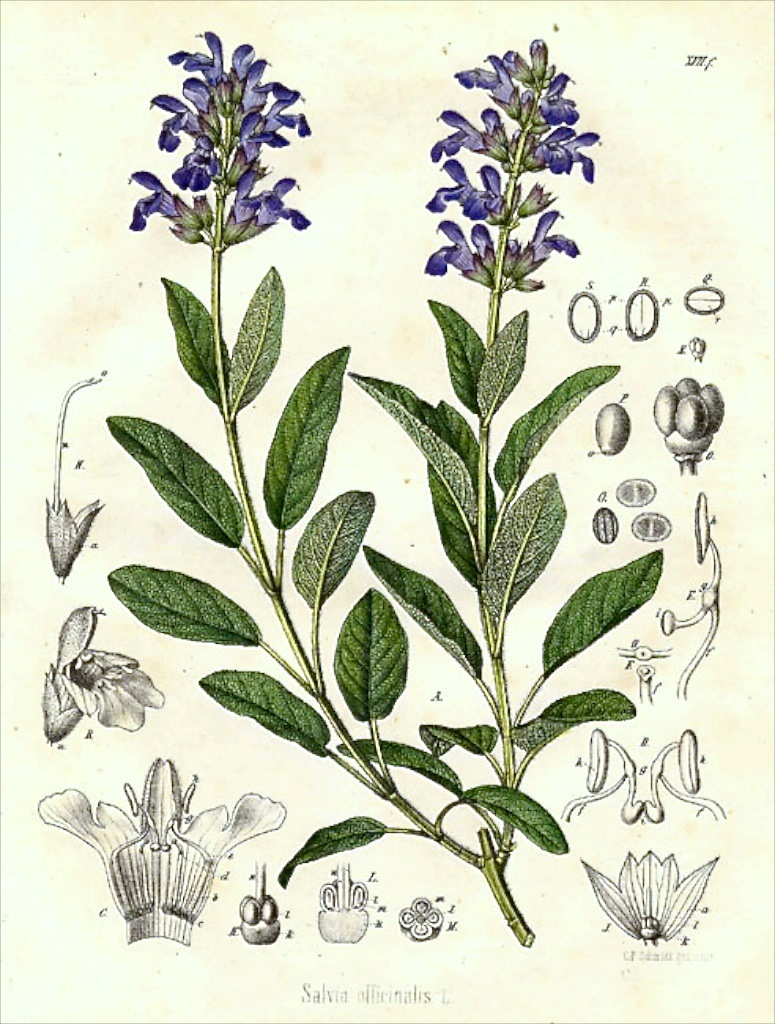
English: sage, garden-sage, common-sage, kitchen-sage
German: Salbei, Echter Salbei, Garten-Salbei
French: sauge
Norwegian: salvie, kryddersalvie, te-salvie
Lamiaceae, perennial.
Used parts: leaves, young shoots.
Qualities and use according to tradition
Inhibits secretion of saliva, sweat and milk, stimulates bile, urine and menstruation. It is antispasmodic, astringent, styptic, relaxing and calming, anti-rheumatic and analgesic, antiseptic and cleansing, and it has a certain blood sugar lowering effect.
Hildegard von Bingen (1098-1179) writes: When you are no longer able to retain the urine because of the cold, then boil sage in water, strain through a cloth and drink this warm and often, then you will become healthy again.
Sage leaf is an old, well known means of cleaning teeth and gums. Sage-added gargle would be beneficial in cases of sore throat and fetid breath. Sage was often added to footbaths to reduce sweaty feet. Fresh sage leaves to insect stings should provide quick relief.
Sage extracts were used to cover wounds, healing slowly, and for cleaning infected rash and eczema. Henrik Harpestreng, who died in Roskilde, Denmark in 1244, gave this piece of advice: If the private parts itch, then wash with wine, cooked with sage.
Since sage can be effective in many so called female ailments, from menopause sweating to hysteria, it is by many considered as herb for women.
Sage has a very long tradition as a spice plant, particularly when there is talk of fatty foods. It also has some preservative effect on foods. It has replaced hops in beer brewing, perhaps also as a preservative?
It was said that you could open locked doors with a sprig of sage. Sage should also have the ability to prolong life, and was often used in connection with someone having good – or bad – desires for each other.