Achillea millefolium
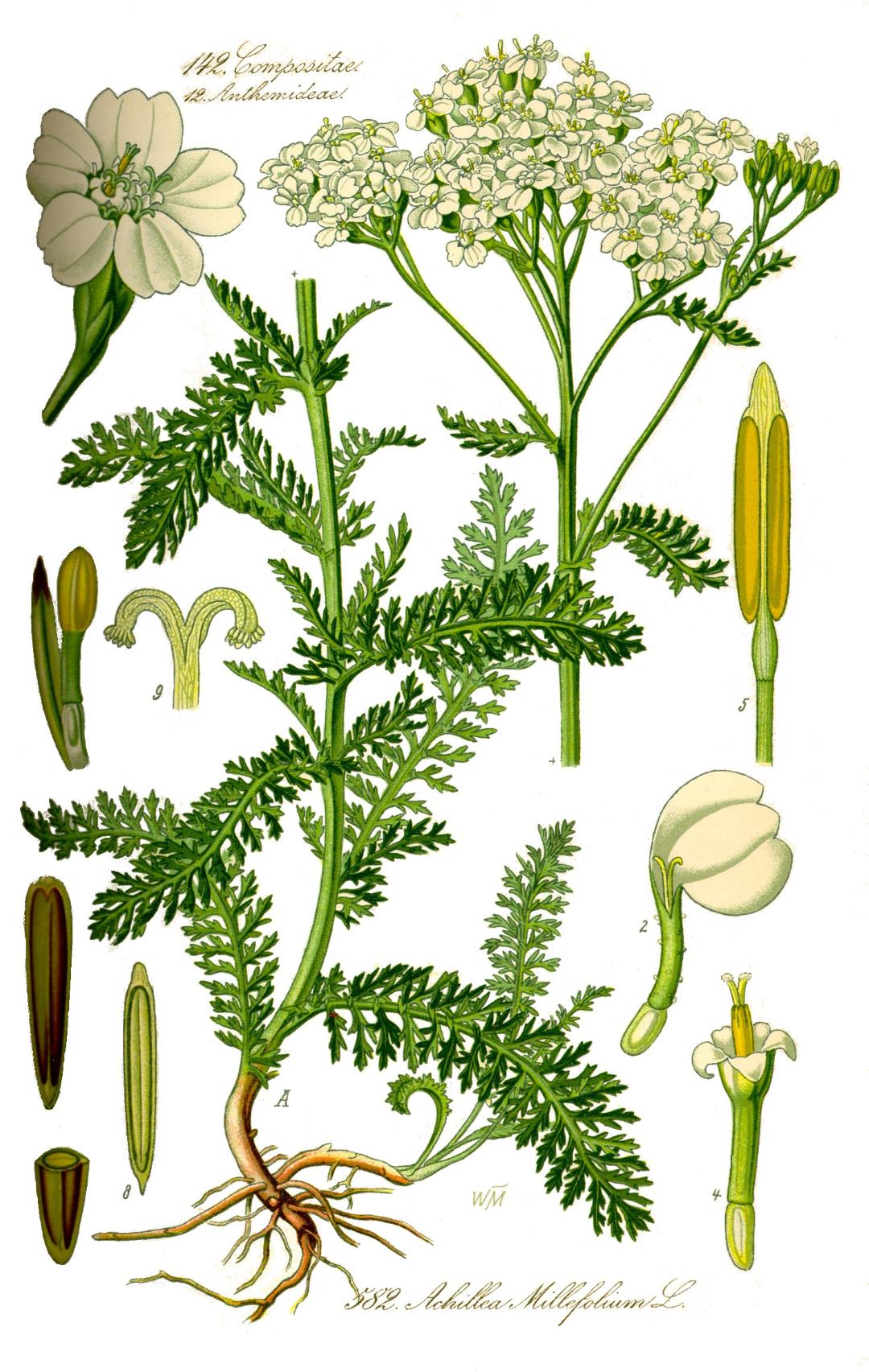
English: yarrow, milfoil, woundwort, soldier´s woundwort, nosebleed, thousand-leaf
German: Schafgarbe, Blutstillkraut, Bauchwehkraut, Tausendblättchen
French: mille feuille, achillée, herbe aux militaires, herbe de St. Jean
Norwegian: ryllik
Asteraceae, perennial.
Used parts: flowers, foliage or the whole herb.
Qualities and use according to tradition
Cramp solving, astringent, blood clotting and blood cleaning, wound healing, anti-inflammatory, stimulates sweat, urine, appetite, digestion and blood circulation, regulates menstruation, lowers fever and blood pressure and strengthens the nerves.
Yarrow has old traditions related to exorcism, it is also a remedy to release trapped feelings and to open the “third eye”.
Ointment of crushed leaves and fat for wound care is known from many of the old cultures, from China and Egypt, from Romans and Vikings. Crush yarrow with boiled unsalted bacon and make a plaster, is the advice from The Swedish Herb Book of 1628. Hildegard von Bingen (1098-1179) advises the hurt one to clean his wound with wine, then to put on a dressing of newly boiled yarrow leaves.
Fresh, crushed leaves on a wound could stop the bleeding and clean the wound, also much used rolled into tampons to put an end to nose bleeding. Lotions with yarrow could ease many skin disorders, from burns to bedsores. Yarrow extract is still to be found in several skin preparations.
Dried yarrow leaves have a traditional use as a spice in sausages and other meat dishes, and in beer as an alternative to hops.
When used as a yarn dyer the flowers give yellow colours and the leaves green.