Armoriaca rusticana
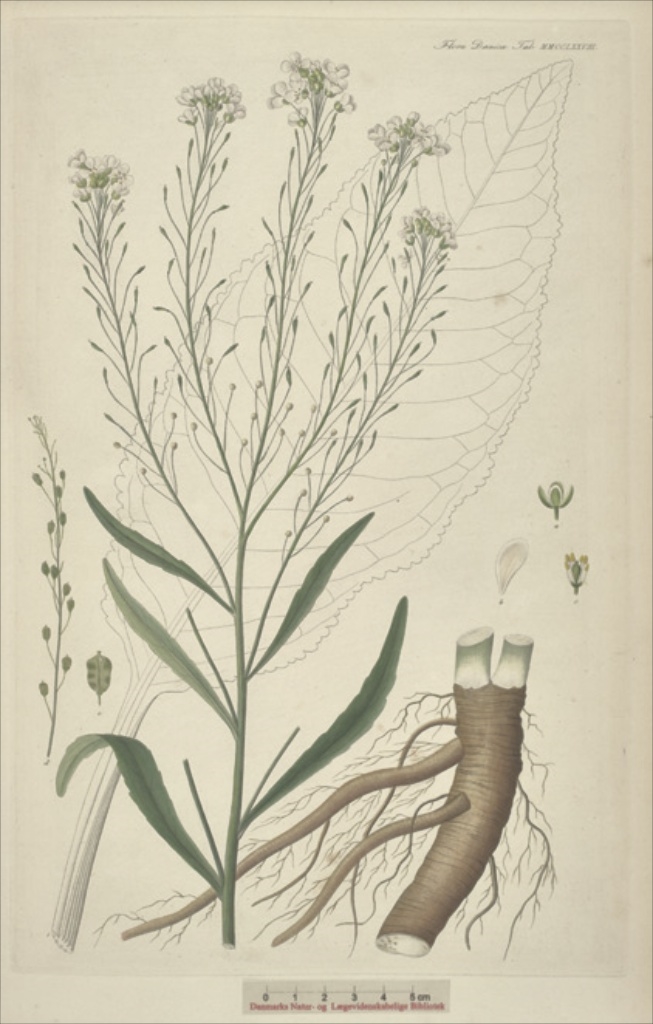
English: horseradish, horse-radish
German: Meerrettich, Bauernsenf, Kren
French: raifort, cranson
Norwegian: peparrot, pepperrot
Brassicaceae ( Cruciferae), perennial.
Used parts: root, rhizome, corms, leaves.
Qualities and use according to tradition
It stimulates blood circulation, appetite and the production of gastric juices, sweat, urine and stool, it is warming, has antibiotic abilities, inhibits inflammation and prevents scurvy.
Chopped in food it is said to have the ability to expel intestinal parasites in animal and man, as a poultice on frost knots and to promote wound healing, upon stiff and rigid muscles and joints. It is also mentioned that horseradish has been used as a substitute for camphor in a cloth on the chest against dense airways.
Poultices may cause blisters on the skin, but is also able to make painful abscesses ripen and crack.
In the Swedish Herb Book of 1628, the author writes: If you mash Horseradish with Vinegar and put this on one with Pest Boils, it takes away the Heat and the Evil.
According to an old belief you could rub your hands with the seeds of horseradish and then be able to grab a viper with no risk of being poisoned.
The juice of horseradish mixed with salt was a traditional remedy to drip into the ear against deafness.
Horseradish was also connected to exorcism, by many considered as a magic witchcraft herb and as a general magic ingredient, almost like the mandrake, and one must think, much easier to get hold of!
Used as a colouring agent the horseradish gives a yellow colour to textiles.