Chenopodium bonus-henricus
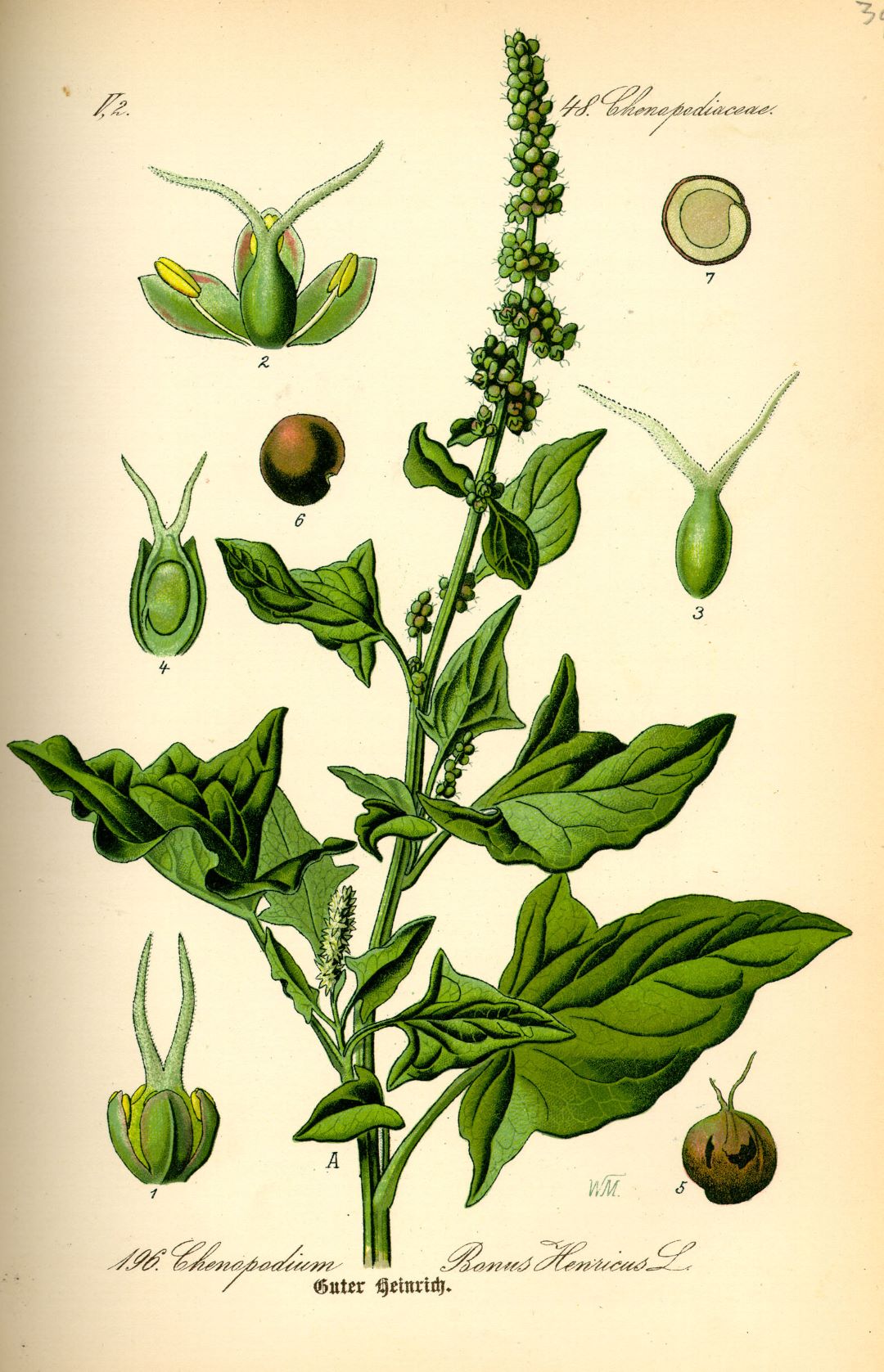
English: good king Henry, poor-man´s asparagus, perennial goosefoot, markery
German: Guter Heinrich, Wilder Spinat
French: chénopode bon-henri, épinard sauvage, ansérine bon-henri
Norwegian: stolthenrik, stolthenrikmelde
Chenopodiaceae, perennial.
Old monastery plant.
Used parts: leaves, young shots, seeds and spikes.
Qualities and use according to tradition
By boiling the herb becomes soft and it softens the stomach. Cooked, chopped leaves are used for constipation, Danish Anemette Olesen tells us. The Swedish name lungrot = lung root, tells us something about traditional use in Sweden. Anyway, the root was used as a cough medicine for sheep, maybe also for Swedes?
Otherwise it was mostly used for food, young leaves as green salad, boiled like spinach or in casseroles and soups, young asparagus-like shoots and spikes, were eaten as vegetables. Young leaves were seen as particularly suitable for weak and anaemic persons, and they prove to be rich in iron, calcium, vitamin B1 and C. Good king Henry was considered particularly suitable for fattening of poultry.
The seeds were used as a mild laxative, but also for the manufacture of a special type of leather.
Otherwise the whole plant gives different shades of red and golden colours to textiles.
Poultice made of leaves helps against sore skin. The Swedish Herb Book of 1628 tells us: Good King Henry is a precious Herb for Healing, used as Plasters and Ointments, and you have to smash it green and put on painful Wounds and Injuries, because it heals very well.